 KOREAN
 CHINESE

Wellness Awareness
- Home
- Students Life
- Wellness Awareness
Wellness Awareness
What Is Wellness?
The World Health Organization (WHO) defines wellness as “a state of complete physical, mental, and social well-being, and not merely the absence of disease or infirmity.”
In everyday life, when someone asks, “Are you okay?”, you may pause for a moment to reflect on how you are feeling emotionally, mentally, and physically. That simple moment of reflection is where wellness begins.
Your Wellness Journey Begins with Awareness
Wellness starts with awareness of the many dimensions that shape your life—your mind, your body, your relationships, and your sense of purpose. It involves recognizing where your energy is going, understanding what supports your growth, and identifying areas that may need additional care or attention.
Your wellness is influenced by daily experiences - small, and seemingly insignificant moments, major life transitions, cultural background, environment, and how you respond to challenges. Wellness is not static; it evolves as you grow, learn, and adapt to new situations.
Wellness is not merely the absence of illness. It is a dynamic and holistic state of well-being shaped by eight interconnected dimensions of life: Emotional, Physical, Social, Spiritual, Financial, Environmental, Intellectual, and Occupational Wellbeing.
You do not need to achieve perfect balance across all areas of life. The goal of wellness is to pay mindful attention to each dimension, recognize opportunities for growth, and discover practices that best support your personal journey.
Wellness is not a destination - it is a continuous process of becoming a healthier, more grounded, and resilient version of yourself.
International Student Wellness Survey
The International Student Counseling Center at Woosong University has developed a Wellness Survey designed to help international students better understand their overall well-being.
This survey was adapted from wellness assessment tools used by Princeton University and the University of California-Davis.
The link gives you access to the survey; Access the Wellness Survey Here!
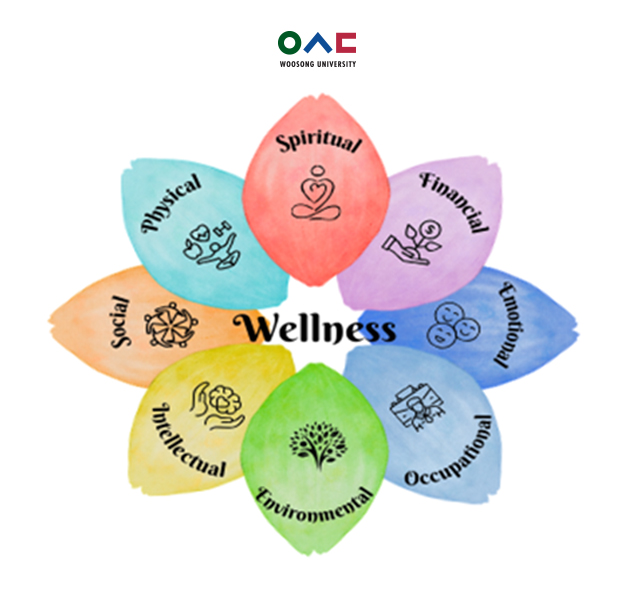
The results of this survey are intended for self-reflection and guidance only. They are not a medical or psychological diagnosis.
Well-being can be understood in many ways, and survey results should be considered alongside your daily experiences, feelings, and personal reflections. Those would be looked at in conjunction with qualitative elements that you experience everyday.
If you are experiencing significant distress or difficulty, we encourage you to contact professional counseling or medical services.
The Eight Dimensions of Wellness
Click on each section below to learn more about the eight dimensions of wellness and discover practical strategies to support your well-being.
1. Emotional Wellness
Emotional wellness involves understanding, managing, and expressing your emotions in healthy ways. It includes developing self-awareness, managing stress, building resilience, and maintaining supportive relationships. Social connections and compassionate self-care also play essential roles in maintaining emotional balance.
Here are some recommendations on how to focus on your emotional wellbeing:
- Check in with yourself: Acknowledge your feelings, celebrate what went well, and learn from mistakes without harsh judgment.
- Be kind to yourself: Challenge negative thoughts and allow yourself space to grow.
- Practice self-care: Make time to relax, enjoy small moments, and engage in activities that refresh you.
- Seek support when needed: Reach out to friends, family, partners, or counselors.
- Manage stress healthily: Try journaling, relaxation techniques, hobbies, and caring for your body.
- Communicate effectively: Be honest, calm, and respectful; listen actively and show empathy.
- Practice mindfulness and gratitude: Take moments to reflect on your day and appreciate what you have.
2. Spiritual Wellness
Spiritual wellness is not limited to religion. It refers to developing a sense of meaning, purpose, and connection to something greater than yourself. It helps foster inner peace, motivation, hope, comfort, and clarity while strengthening your relationship with yourself and with others who share similar values. Here are a few suggestions on how to improve your wellness:
- Connect with your faith community: Engage with people who share your beliefs, in person or online, and participate in activities that build connection.
- Volunteer and serve others: Join local volunteer opportunities or nonprofit initiatives aligned with your values.
- Practice mindfulness: Spend quiet time focusing on your breath, thoughts, and surroundings to stay present and grounded.
- Journal regularly: Write about your thoughts and daily experiences to process emotions and reflect with gratitude.
- Practice yoga: Use yoga to unite mind, body, and spirit; manage stress; and enhance mindfulness.
- Pray, meditate, or manifest: Set aside time to focus on hope and positive intention through prayer, meditation, or mantras.
- Connect with nature: Take walks, observe your surroundings, and spend time outdoors to feel grounded and connected to the world around you.
3. Physical Wellness
Physical wellness focuses on caring for your body through healthy daily habits. This includes balanced nutrition, adequate sleep, regular physical activity, preventive healthcare. It also involves preventive care - such as regular checkups - and avoiding harmful behaviors like tobacco use, unsafe sexual practices, excessive alcohol consumption, and drug misuse.
- Be physically active: Exercise regularly through gym workouts, running, or other activities to build strength and support heart health.
- Eat nutritious foods: Maintain a balanced diet with fruits, vegetables, fiber, and protein while limiting processed foods.
- Stay hydrated: Drink plenty of water throughout the day and aim for about 2.7–3.7 liters daily.
- Get enough sleep: Aim for 7–9 hours each night to support mood, focus, and overall well-being.
- Practice healthy habits: Avoid drugs and smoking, drink responsibly, and maintain good personal hygiene.
- Use preventive care: Get regular checkups, stay up to date on vaccinations, and monitor allergies and overall health.
4. Social Wellness
Social wellness is the ability to build authentic, supportive, and healthy relationships with others involves building healthy, supportive, and respectful relationships. Feeling connected and having a sense of belonging are essential to emotional and mental health, especially while living in a new country. A strong social network contributes to a positive outlook, provides healthy coping strategies during difficult times, and helps deepen your understanding of yourself.
How to enhance your social wellness:
- Communicate openly and respectfully by listening actively, expressing yourself honestly, and showing empathy.
- Stay connected with your community by joining clubs, volunteering, and keeping in touch with friends and family.
- Practice self-care and set healthy boundaries to support your well-being and strengthen your relationships.
- Handle disagreements with respect, focus on solutions rather than “winning,” and accept feedback with an open mind.
- Seek support from friends, family, or professionals when stress or loneliness affects your daily life.
5. Financial Wellness
Financial wellness means managing your finances in ways that reduce stress and support both your present needs and future goals. It means understanding your income, expenses, and savings; planning for future needs; and budgeting in a way that supports your goals. If you can meet your basic and unexpected needs, feel secure about your financial future, and handle your obligations responsibly, you are practicing strong financial wellness.
Here’s how to build financial wellness:
- Create a Budget: Understand your income, expenses, and spending limits.
- Track Your Expenses: Review your bank activity, identify spending drains, and use an app or spreadsheet to monitor and adjust.
- Use the 70/20/10 Rule:
- 70% for essentials (rent, food, utilities)
- 20% for personal needs (self-care, leisure)
- 10% for savings and debt repayment
- Stay Informed: Look for scholarships, financial aid, job openings, deals, and other opportunities to save or earn money.
6. Occupational Wellness
Occupational wellness refers to finding satisfaction and balance in your studies, work, and future career planning. It includes using your skills in an environment that aligns with your values, managing stress, and building healthy relationships. For students, this includes developing academic habits, communication skills, career goals, and professional experience.
Here’s how to build financial wellness:
- Set Clear Goals: Define 6-month to multi-year goals; use a vision board to stay focused and motivated.
- Make Action Plans: Schedule regular steps—studying, networking, or job searching—to move toward your goals.
- Know Your Strengths & Weaknesses: Build on your strengths and work to improve areas that need development.
- Build Strong Work Habits: Practice clear communication, learn useful tools, develop critical thinking, read widely, and seek internships or volunteer roles.
- Network in Your Field: Connect with professionals to learn about opportunities, receive guidance, and strengthen your resume. Create a LinkedIn profile.
- Do Informational Interviews: Speak with people in your desired career to gain insights, advice, and discover alternative paths.
7. Intellectual Wellness
Intellectual wellness is the ability to actively engage in mentally stimulating activities, have a lifelong curiosity towards knowledge, being open to new ideas, staying informed about social, political and other current issues, and treating mishaps as opportunities to grow
- Never Stop Learning: Keep expanding your knowledge through classes and daily learning.
- Build Skills & Hobbies: Try new activities - from arts to hands-on crafts - to grow your abilities.
- Read Regularly: Improve comprehension, vocabulary, critical thinking, and perspective through consistent reading.
- Stay Updated on Current Affairs: Follow news and global events to strengthen awareness and informed decision-making.
- Play Brain-Stimulating Games: Use puzzles, strategy games, and memory challenges to sharpen problem-solving skills.
- Seek Academic Support: Reach out to professors, TAs, or counselors for guidance and academic improvement.
- Develop Creativity: Practice creative hobbies to enhance problem-solving, emotional regulation, and cognitive skills.
- Engage in Meaningful Discussions: Participate in debates and deep conversations to broaden perspectives and improve critical thinking.
- Appreciate the Arts: Explore museums, performances, and cultural events to expand cultural insight and intellectual growth.
8. Environmental Wellness
Environmental Wellness is concerned with the space you occupy privately and socially. When you experience environmental wellness, your concern goes much beyond your immediate circle and you care for everything as a whole. It is important to be environmentally aware and be an active participant in creating an area where you and the people around you can exist happily, healthily and sustainably. You can follow these practices to reach environmental wellness:
- Practice the 3 Rs: Reduce use of harmful materials, reuse what you can, and recycle non-biodegradable items.
- Use Public Transportation: Conserve energy and build community through public transit and carpooling.
- Learn About Climate Change: Stay informed through weather updates, scientific research, and global climate impacts.
- Declutter Your Spaces: Maintain clean, organized home and work areas to support physical and mental wellbeing.
- Spend Time Outdoors: Connect with nature by visiting parks, beaches, mountains, and other natural spaces.
- Join Green Volunteering: Participate in cleanup events, tree planting, habitat maintenance, and wildlife monitoring to support environmental health.
Important Notice
All wellness information and resources provided on this website are for educational and supportive purposes only. They are not intended to replace professional medical, psychological, or legal services.
External links are provided for informational purposes, and Woosong University does not formally endorse or manage external organizations.
If you need immediate support, please contact the International Student Counseling Center or appropriate emergency services.
Connect with Woosong
Contact Us
Get in touch with our team